Category Archives: Off Grid Living

Off Grid Living – Prepping to Live Off the Grid

Building a Cabin from Light Weight Pallet Wood Is a Cheap Way to Build an Off Grid Homestead

How to Build a Cabin from Light
Weight Pallet Wood Deep in the Woods

We built this cheap off grid cabin using free pallet wood. We saved money building the pallet wood cabin by using recycled pallets. This is a great off grid wilderness project as pallet wood is light and easy to carry into the forest. It is also easy to work with using hand tools.

Many people do not have the space, time or money to build a log cabin. But building a tiny home off grid is still achievable using cheap or even free materials, and that is where pallet wood works so well.

Although only small, this one man cabin has a raised bed, folding table, bookshelf and chair – all made from pallet wood.

This small hut in the woods has no electricity or power, but that isn’t needed. To begin with, we started to break the pallets down into useable timber to build the foundations and the frame of the cabin.

For the roof we used recycled tin from an old barn roof. We then used an old garden shed window and fit this to the western wall of the cabin.

Once the framework and structure of the cabin was complete, we began to some pallet wood projects and focused on building furniture for the inside of the cabin. We cooked our food over fire using a tripod lashed together bushcraft style until we installed a wood stove.

Then we used cast iron cooking gear and the oven to cook up bigger meals. We learned many building skills on this project and it was great to build with hand tools. The pallet cabin still stands to this day, and we use it as a bushcraft camp to practice wilderness survival skills, primitive technology and as a base camp to create more off grid films for you guys.

# # #

Batteries vs. Blackouts – 1,100 Homes Powered Through Vermont Outage With Storage

Utility Green Mountain Power’s pilot programs paid off with
clean, distributed backup power amid a statewide outage

Living Off Grid - Batteries vs. Blackouts - 1,100 Homes Powered Through Vermont Outage With Storage

Living Off Grid – Batteries vs. Blackouts – 1,100 Homes Powered Through Vermont Outage With Storage

Home batteries proved their resilience value during Vermont’s Halloween blackout.

Vermont – A major rain and wind storm struck the state at the close of October, knocking out power to some 115,000 customers. Among those affected, 1,100 homes managed to keep the lights on thanks to pilot programs specifically designed to promote resilient backup power with energy storage. The battery backup service lasted nine hours on average, but the longest instance stretched to 82 hours.

The event offers a timely data point for other jurisdictions mulling the use of home batteries for resilience. Northern California community power purchasers yesterday requested proposals for home batteries to keep customers powered during the region’s fire-season safety shutoffs. Such a model remains cutting-edge, but Vermont utility Green Mountain Power has shown it can be done effectively.

A couple of years ago, Green Mountain Power launched a Grid Transformation Pilot that allowed homeowners to pay a monthly fee to host a utility-owned and controlled Tesla Powerwall battery. The residents could use it for backup in an outage, and the utility could dispatch the capacity to manage peak demand at other times.

The program previously generated more headlines by saving hundreds of thousands of dollars during annual system peak events than for fulfilling the backup function. In 2018, GMP’s network of batteries reduced consumption during the ISO New England peak hour, saving about $600,000 on capacity fees. This year, a larger number of batteries, totaling 10 megawatts of capacity, responded to a late July peak, saving nearly $900,000 from a single hour of operation.

“We think about our need to deliver reliability constantly,” said Josh Castonguay, the utility’s chief innovation officer. “This has provided us with an amazing tool that can deliver reliability and also pay for itself.”

Those successes made for favorable economics for the utility system as a whole. But the Powerwalls hadn’t had a major opportunity to chance to demonstrate the backup benefit that was promised.

That changed on Halloween.

“We had near-100 mph gusts on top of some of the ridge lines,” Castonguay said. “We had damage across the entire state.”

The 1,100 homes that islanded from the grid accounted for the largest home-battery backup event in the utility’s territory so far, he added.

One reason for that: The utility keeps adding more batteries.

Read more => https://www.greentechmedia.com/articles/read/green-mountain-power-kept-1100-homes-lit-up-during-storm-outage

# # #

How to Make Money with Franchises Targeting Off Grid Doomsday Preppers that Are Stocking Up on Supplies

Some Top Franchises that Target Preppers that Sell
Supplies Needed to Survive in Case Shit Hits the Fan (SHTF)

Living Off Grid - How to Make Money with an Off Grid Franchises Targeting Doomsday Preppers

Living Off Grid – How to Make Money with an Off Grid Franchises Targeting Doomsday Preppers 

What Are Doomsday Preppers?

Denver, Colorado – If you’re not a regular viewer on the Reality Television circuit, you may not know about the television show that’s on the National Geographic Channel called Doomsday Preppers. In its third season, Doomsday Preppers is a television show about preppers and survivalists that are preparing just in case Shit Hits the Fan (SHTF). Here’s how the show is described on the National Geographic website:

“Doomsday Preppers explores the lives of otherwise ordinary Americans who are preparing for the end of the world as we know it. Unique in their beliefs, motivations, and strategies, preppers will go to whatever lengths they can to make sure they are prepared for any of life’s uncertainties.”

Drama aside, being prepared is a way of life for a growing number of people. Some Americans simply want to be prepared for the aftermath of a natural disaster like Hurricane Sandy or Katrina. Those events disrupted lives and businesses for weeks, months, in some cases years.

Did you know that there are meetings taking place for preppers all over the United States? Most are likely kept within close circles of family and friends, but some meetings are public. On the Meetup.com website I found many Meetups on topics such as preparedness, prepping, disaster, survival and similar terms. Go ahead and try searching. You may be surprised.

There are literally hundreds if not thousands of websites, blogs, podcasts and YouTube channels on the topic of prepping and survival. Some have large audiences.

Prepper Franchise Opportunities with Mainstream Appeal

Let’s look at franchise opportunities that may take advantage of the prepping trend, yet also have crossover appeal to a mainstream market. There’s also quite a bit of overlap in products when it comes to hikers, campers and hunters. Keep that in mind as part of the potential target market.

I emphasize the crossover appeal when it comes to a prepper franchise, because the potential market will be larger.

Also, unless you are living the prepper lifestyle yourself, you may find it hard to break into a niche market like preppers.

Metal Supermarkets

The Anderson shelter was a popular mini-bomb shelter that was distributed to citizens in the UK during WW2. It’s a well-known fact that The Anderson shelters performed well under blast and ground shock. That’s because they were made with curved and straight galvanized corrugated steel panels – 14 of them actually.

Those wanting to reinforce a basement or building with galvanized corrugated steel panels might turn to a place like the local Metal Supermarkets franchise that makes it easy to buy reinforcing materials.

Batteries Plus

In the event of a natural disaster or something more, it’s a safe bet that electricity will be disrupted, too. It’s a good thing batteries were invented. Long-lasting batteries will be crucial to our comfort, even to our survival.

Just-A-Buck

Preppers are able to stock up on lots of items at the local Just-A-Buck store.

Everything in the store costs a dollar. I purchased toothbrushes, toothpaste, soap, razors, candles, lighters, flashlights, and hand-warmers. I also bought dozens of non-perishable food items like crackers, soup, nuts and candy bars, to name just a few.

Just search Google and you will find many articles and YouTube videos on the topic of prepping at a dollar store, such as this one at Apartment Prepper.

Dollar stores are great places to get lots of supplies for not a lot of money. It’s really about volume when one is focused on preparing for a time when stores may no longer be stocked. It has to be.

Gro-O

Most off gridders are going to have to grow some of their own food. Did you know that there’s a franchise that specializes in designing and setting up organic fruit and vegetable raised planter gardens?

Gro-O is the name of the franchise, and they’re big on education. You can attend a garden party at one of their locations where you learn how to set up your organic garden.

Once you’re done learning how to grow your own food in an organic garden, you can go to the Gro-O website and purchase a few GroEasy Redwood Planters. These raised planter boxes are portable and easy to assemble. Bonus: No hardware or tools are needed.

The Beef Jerky Outlet

Beef jerky is one of those food items that has been around since before refrigeration. And it is a food of choice for many preppers and survivalists, as well as campers, hikers and others who spend time outdoors. From YummyJerky.com:

“Generally speaking, commercially produced, vacuum-packed beef jerky has a shelf life of at least one year without refrigeration. Under ideal storage conditions, some varieties of beef jerky can last for two years or more.”

That’s why I paid a visit to The Beef Jerky Outlet, a young franchisor that specializes in tasty, high-quality beef jerky. Whether your local area could sustain a retail outlet specializing mainly in one niche product like beef jerky (and related items) is something to investigate.

These are a handful of the more mainstream franchises available that have overlap with the prepper market.  Do more research at the link below or put Google searches to work!

Read more => https://smallbiztrends.com/2013/12/prepper-franchise.html

# # #

How to Heat Off Grid Homes and Cabins with Trombe Walls and Passive Solar Window Heaters

How to Build a Passive Solar Trombe Wall  Heater that Can Be Made with Stones and Sheet Metal for Off Grid Homes and Cabins

Off Grid Living - How to Build a Passive Solar Heater Trombe Wall with Stones or Sheet Metal

Off Grid Living – How to Build a Passive Solar Heater Trombe Wall with Stones or Sheet Metal

How to Build a Passive Solar Furnace Heater Also Called Trombe Wall

Phoenix, Arizona – Solar can also be used to heat a shed, cabin or home with no electricity by building a passive solar furnace heater, which is very similar to building a solar hot water heater except that you’ll be heating air inside a black box with a window and using aluminum/tin cans, copper tubing, rocks or sheets of tin roofing that are painted black to absorb heat.

As hot air rises it will flow from the heated box into a colder structure at the top of the room while sucking in colder air at the bottom of the using a Trombe Wall vacuum air pattern. To improve circulation, you can add a solar attic fan that will air circulation dramatically.

How to Heat Homes with Passive Solar Heaters and Solar Attic Fans

# # #

#living #offgrid #trombe #wall #passive #solar #furnace #heater #attic #fans #cabins #sheds #homes #solarenergy #solarpower #solarpanels #renewableenergy #energy #greenenergy #solarsystem #cleanenergy #gogreen #gosolar #solarpanel #sun #solarpv #energiasolar #sustainability #renewables #bhfyp

How to Build a Firewood Shed for an Off Grid Homestead

Building a firewood shed to keep your stack of
firewood from getting damp by building this simple shed

This video demonstrates how to build a firewood storage shed to properly store and dry firewood. It’s simple to build, using mostly straight cuts, no mitered corners or joints. The shed holds about one cord of wood, i.e., 4 feet by 4 feet by 8 feet. The cost of materials for the shed are about $250 and it takes two people about 5 hours to build.

# # #

How to Build a Rocket Mass Heater to Heat the Crawl Space of Your Off Grid Home, Cabin or Shed

Heating the Crawl Space of Your Home, Cabin or Shed with a Rocket Mass Heater to Keep Your Home Warm During the Coldest Polar Vortex

What is a rocket mass heater?

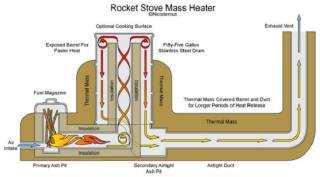
A rocket mass heater a hyper efficient wood stove that uses far less wood to get a far more effective result, whether it’s heating or cooking. It grew out of efforts in developing countries to build a more fuel efficient, safer cooking stove and it has since morphed into an idea that could eventually replace your furnace.

When building your first off grid cabin, one of the chief concerns is what is the best to heat it. Most people rely entirely on wood fuel. A regular wood burning stove will make a big dent in the precious wood pile. But not with a rocket mass heater. For those who haven’t encountered one before, the rocket mass heater (RMH) is a well proven though not widely used way to burn wood very efficiently, and then capture all the heat produced, in a mass – normally a bench or bed – by passing the flue horizontally through it. (see below)

Off Grid Living - How to Build a Rocket Mass Heater to Heat a Home or Cabin

Off Grid Living – How to Build a Rocket Mass Heater to Heat a Home or Cabin

First it burns small fuel, which we typically don’t use in our range cooker. Secondly, it burns very efficiently and thus cleanly, so less fuel is required. Most people are  a little skeptical about the claims made for RMHs, especially the cleanliness of the exhaust and the temperatures that could be reached inside the burner, but they are indeed very true.

Most will require a 20ft horizontal flue, heat retaining bench that snakes its way around the crawl space underneath the cabin and a 50 gallon steel drum needs to be designed as part of a building as outlined in the diagram above.  It would be smart to build this at the same time your build your home or cabin.

Read more => https://www.permaculture.co.uk/readers-solutions/build-your-own-rocket-mass-heater

# # #

Click here to like and follow our Off Grid Living Group on Facebook! 

Using a Thermo Electric Fan to Harvest Wood Stove Heat Junkyard Style for an Off Grid Home or Cabin 

New York – Anyone who heats with a wood stove knows that the experience is completely different from typical central heating. It’s not for everyone, though, and it’s certainly not without its trade-offs. One of the chief complaints is getting heat away from the stove and into other areas of the house, and many owners turn on an electric fan to circulate the heated air.

That’s hardly in the green nature of wood heating, though, and fans can be noisy. So something like this heat-powered stove-top fan can come in handy. Such fans, which use Peltier devices to power a small electric motor, are readily available commercially.

The Peltier module was salvaged from an old travel fridge and mounted to a heat sink from a computer to harvest heat from the stove. The other side of the Peltier needs to have a heat sink to keep it cooler than the hot side, and chose an unconventional bit of salvage for the job — the cylinder of a chainsaw engine. The spark plug hole sprouts the mount for the fan motor, and the cooling fins help keep the Peltier cool. And to prevent overheating of the device, he added a surprise — a car cooling system thermostat to physically lift the device off the stove when it gets too hot. Genius!

Read more => https://hackaday.com/2018/04/27/thermoelectric-fan-harvests-wood-stove-heat-junkyard-style/

# # #


Best Tips and Tricks for Using a Wood Stove to Heat an Off Grid Home, Shed or Cabin

Watch this Video on How to Add Heating Conduit Pipes, Fans, Bricks and a Damper Plate to Greatly Improve a Stove’s Heat Production

Why heat with a Wood Stove? The answer is simple-comforting, economical, and environmentally-friendly.  Whether it’s the warm glow of the fire, the crackle of the wood or the deep penetrating warmth, wood stoves have a way of making people feel relaxed and right at home.

# # #

Click here to join our New York Living Off Grid page on Facebook!

Enphase: Demand for Solar-Battery Systems Could Soar After California Blackouts as Customers Forced to Live Off Grid

Grid woes “will only increase the attach rates for storage” in the country’s biggest rooftop solar market, Enphase CEO says.

Living Off Grid - Enphase - Demand for Solar-Battery Systems Could Soar After California Blackouts

Living Off Grid – Enphase – Demand for Solar-Battery Systems Could Soar After California Blackouts

Enphase’s current growth is based around its core solar microinverter business. But in discussing the company’s Q3 earnings Tuesday, CEO Badri Kothandaraman focused on how Enphase’s soon-to-launch integrated energy storage system could aid Californians facing the state’s unfolding wildfire and grid blackout emergency.

California-based Enphase is far from the only residential solar equipment provider adding batteries to the rooftop PV proposition. Sunrun, the U.S. rooftop solar leader, says that a quarter of its California solar customers are now choosing to add batteries to their systems.

While Kothandaraman declined to predict how many battery-backed Ensemble systems the company will sell, he expects similar “attach rates” to those seen by Sunrun in the California market.

The demand for solar-battery backup systems could skyrocket, Kothandaraman said, with millions of Californians undergoing days-long blackouts this month under the expanded fire-prevention power outage regime of bankrupt utility Pacific Gas & Electric.

Read more => https://buff.ly/34g7G6M

#California #OffGridLiving #LivingOffGrid #Enphase #MicroInverters #Solar #Panels #Batteries #PGE #Wildfire #Blackouts #Discounts

What Electric Power Outages Mean for Solar’s Potential in California to Solve the PG&E Electricity Blackouts

Recent blackouts in California have millions of people looking for ways to keep the power resulting in a huge spike in interest in another technology – solar panels and home batteries

What Electric Power Outages Mean For Solar's Potential in California

Living Off Grid – What Electric Power Outages Mean For Solar’s Potential in California

Solar Power to Solve Northern California Wildfire Electricity Blackout Crisis

The recent blackouts in California have millions of people looking for ways to keep the power on. Some bought portable generators, but there was a huge spike in interest in another technology – solar panels and home batteries. Lauren Sommer of member station KQED reports.

Interview of Anne Hoskins by Lauren Sommer, KQED

LAUREN SOMMER, BYLINE: Power is out at every house on this block in the Berkeley Hills. You could tell ’cause all the cars are parked outside the garages ’cause the garage doors won’t open, except for one.

HOWARD MATIS: Well, it works.

SOMMER: Hi, there.

MATIS: Hi.

SOMMER: I’m Lauren.

MATIS: Hi, Lauren.

SOMMER: The lights were on at Howard Matis’s house during the last PG&E outage. His fridge…

MATIS: Which you can see – fully powered and cold.

SOMMER: That’s because inside his garage…

MATIS: OK. We can go up here.

SOMMER: …Are two Tesla Powerwall batteries, about four feet tall, mounted on the wall.

MATIS: The whole house – everything – everything is powered by these two batteries.

SOMMER: The solar panels on his roof keep them charged. Solar alone won’t usually work during an outage because it’s still connected to the grid. But batteries let you wire a house to be its own little island, a 24-hour microgrid. Matis bought this system because he expects California’s fire problem to get worse.

MATIS: I lived through one disaster, and so I know what a wildfire is like.

SOMMER: Matis lost his home in the 1991 Oakland Hills fire. Some of his neighbors died trying to escape. People there are more fire-aware now. The power lines are buried underground. But they’re not immune from PG&E’s blackouts. Matis is still frustrated with the utility.

MATIS: I’ve talked to PG&E in the past, and I realized they didn’t know what they’re talking about.

SOMMER: Folks from the utility beg to differ. But other companies see an opportunity in that resentment.

ANNE HOSKINS: We’ve had a very big uptick in – I guess we would call them leads.

SOMMER: Anne Hoskins is chief policy officer at Sunrun. It sells solar and battery systems.

HOSKINS: We have a better way than relying on this, you know, over-a-century-old system.

SOMMER: Hoskins says the batteries aren’t just for emergencies. Homeowners can use them every day to store solar power, unlike portable gas generators.

HOSKINS: They’re loud. They’re dirty. And that also contributes to the problem, in our view, that we’re facing, which is climate change.

SOMMER: But batteries are pricey. A Powerwall costs more than $6,000, plus installation. Hoskins says state rebates and federal tax credits can knock thousands off that price, and Tesla is offering a discount for Californians affected by the blackouts. Still, there’s the potential for wealthier homeowners to buy their way out of these blackouts, leaving everyone else feeling the brunt.

HOSKINS: How can we build a system so that all those investments that people are making can bring a benefit to the grid as a whole?

SOMMER: Hoskins says that’s possible. You can have a bunch of solar and batteries in people’s homes that can feed into the local grid and supply everyone. It’s called a virtual power plant. Sunrun is planning one in West Oakland, where 500 low-income households will get solar and batteries. The idea is that making power locally means you don’t need as many big transmission lines to bring it in from far away.

Read more of Lauren Sommer, KQED report => https://buff.ly/2NM45Xk